
Why does a stressful job or a few too many short nights of sleep matter to your legs? It sounds like an odd question, but new research suggests the connection is real and involves one of the more overlooked cardiovascular conditions. Peripheral artery disease does not get talked about as often as heart attacks or strokes, yet it affects more than 200 million people worldwide, and two studies published this year suggest that everyday habits like sleep and job stress play a bigger role in it than most people realize.
What Peripheral Artery Disease Actually Does
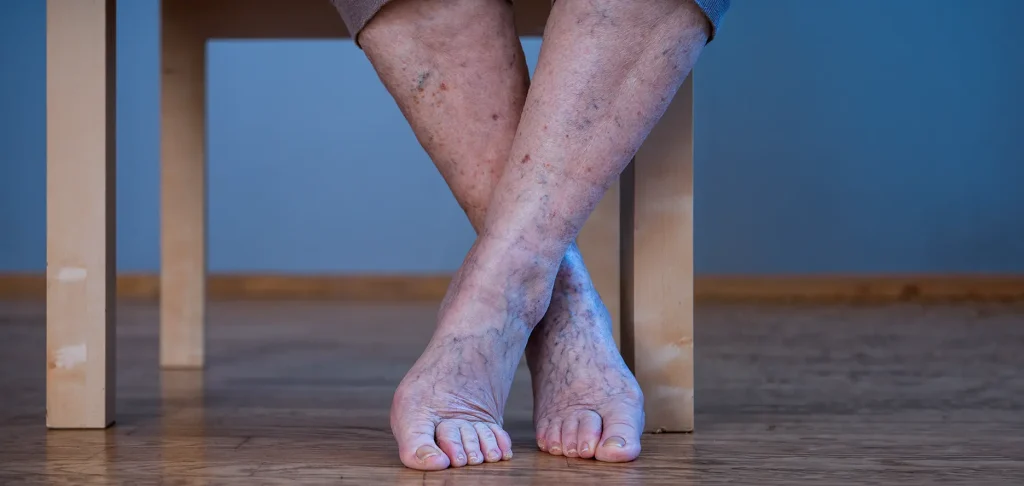
Peripheral artery disease develops when cholesterol and other fatty deposits build up inside the blood vessels that carry blood to your limbs, most often the legs. As those vessels narrow, blood flow slows down, and walking can start to cause real pain. Left alone, the condition raises the risk of heart disease and stroke considerably. More than 8.5 million people in the United States live with it, yet researchers say the list of known risk factors is still surprisingly short.
Work Stress and Its Link to PAD

A study published in the Journal of the American Heart Association looked at more than 139,000 men and women across four countries, following them for nearly 13 years. None of the participants had a history of peripheral artery disease when the research began. People who reported work-related stress, meaning high demands paired with little control over their job, were 1.4 times more likely to end up hospitalized for the condition than those who did not report that kind of stress.
Katriina Heikkila, the lead researcher from the Karolinska Institute in Stockholm, said the findings point to work stress as a risk factor for peripheral artery disease in much the same way it already is for heart disease and stroke. The reasoning makes sense biologically, too. Chronic stress raises inflammation and blood sugar levels, both of which can worsen artery damage over time, even if the direct evidence linking stress to heart disease has been limited so far.
Interestingly, the increased risk was more pronounced among men, people in higher income brackets, and smokers, although researchers cautioned that these smaller subgroups had fewer total cases to draw firm conclusions from.
Sleep Habits and Peripheral Artery Disease Treatment Considerations

A second study, published in the European Heart Journal Open, examined sleep duration among more than 650,000 participants and found something striking. People who slept less than five hours a night had a 74% higher risk of developing peripheral artery disease compared to those who slept seven to eight hours. Researchers went a step further using a method called Mendelian randomization, which uses genetic data to test whether one factor actually causes another rather than just appearing alongside it.
Dr. Shuai Yuan, who led the study, explained that the relationship between short sleep and the disease appears to run in both directions. Poor sleep seems to raise the risk of developing the condition, and having the condition also seems to make good sleep harder to come by, likely due to leg pain and discomfort.
Long sleep and daytime napping were also linked to a higher risk in the observational data, with sleeping eight or more hours associated with a 24% increase and regular napping with a 32% increase. However, the genetic analysis did not confirm a causal link for either of these, so researchers are treating those findings more cautiously than the short sleep results.
Why Everyday Choices Matter
None of this means stress or sleep alone determines whether someone develops the condition. Genetics, smoking, diabetes, and activity level matter too, and PAD treatment plans usually account for all of them. But these findings suggest that managing stress and prioritizing seven to eight hours of sleep each night are reasonable, low-cost habits worth building, especially for anyone already managing other risk factors.
If leg pain, numbness, or slow-healing wounds have become common for you, it may be worth asking a specialist about PAD treatment options soon. Early peripheral artery disease treatment is far more effective than treatment initiated after symptoms have progressed.
Talk to a Heart Care Center About Your Risk
A good heart care center can evaluate your personal risk factors, including work stress, sleep habits, and family history, and help you build a plan that actually fits your life.
Advanced Cardiovascular Center offers evaluation and treatment for PAD and related vascular conditions.