VenaSeal Treatment for Varicose Veins
Your leg veins work against gravity every single day. To do that job, they rely on a series of one-way valves that push blood upward toward the heart and stop it from sliding back down. When those valves start to weaken, blood does exactly what gravity wants – it pools. That pooling is called venous reflux, and it is what causes the aching, heaviness, and visible bulging that most people associate with varicose veins.
Treating varicose veins properly means dealing with the vein that has stopped working – not just the surface symptoms. When that vein is closed off, the body absorbs it gradually, and blood finds its way through nearby veins that are still doing their job.
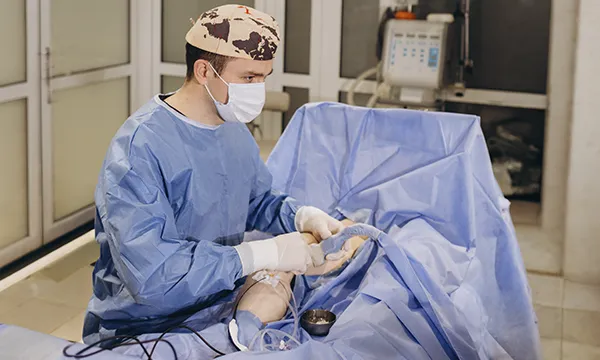
VenaSeal gets to the root of venous reflux without any open surgery. It is a short, minimally invasive procedure done under imaging guidance – and for many patients, it is over before they have really settled in.
What is VenaSeal?
VenaSeal works differently. It’s not about heat at all. Instead, it uses a medical adhesive, basically a safe “vein glue”. It seals the vein from the inside. With ultrasound guidance, the doctor puts a small amount of this adhesive inside the vein, and it seals up right away. There’s no need for multiple numbing injections, and no risk of heat damage to surrounding tissue. For patients who want as little intervention as possible, this is often a good fit.
Who can get VenaSeal?
VenaSeal is suited to people whose symptoms come from venous reflux – such as leg pain, heaviness, swelling, bulging veins, skin changes, or early signs of ulcers. It is also worth considering for anyone who has tried compression stockings without much relief.
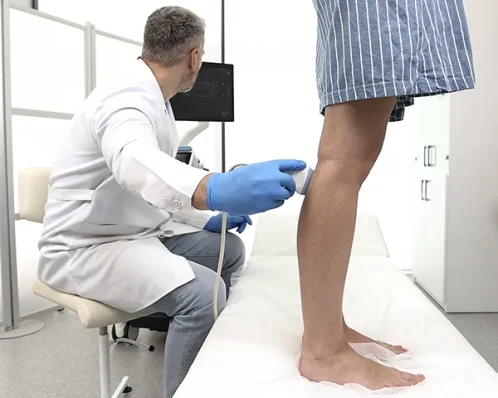
Every patient goes through a personalized assessment first. Ultrasound mapping is done beforehand so the right vein is treated and healthy veins are left alone.
How long does the procedure take?
The procedure usually takes between 30 and 60 minutes, depending on the length of the vein being treated. You stay awake throughout. Most people say it is far less of an ordeal than they expected, and walking straight after is not just allowed – it is encouraged.
Recovery and aftercare
Recovery is generally quick, though full results take time to show. The vein closes during the procedure itself, but the body needs a few months to absorb it. Most people start seeing visible changes within 2-3 months. Smaller veins can clear up in a matter of weeks; larger or more involved cases may take a little longer.
The day-to-day recovery is manageable for most people. Normal activities can usually resume within a day. Doctors typically advise holding off on heavy lifting or intense workouts for a week or two. Unlike some other vein treatments, VenaSeal does not usually require compression stockings afterward — which is one of the reasons patients tend to find it more convenient.
Follow-up visits and ultrasounds are scheduled to check how the vein is healing and confirm blood flow is going where it should.
Safety and effectiveness
VenaSeal boasts a proven reputation. The rate of venous closure is 90 to 95 percent within one year, while the data collected over a long period suggests that approximately 85 to 90 percent of the closed veins still stay closed five years later.
There are side effects, although they are rare and transient, such as minor bruising, slight soreness, some swelling, or rarely localized skin numbness. Severe side effects are quite rare, and their probability becomes even lower if the procedure is conducted by a highly skilled vascular surgeon under ultrasonic guidance.
What are the advantages of VenaSeal?
The key advantage of VenaSeal is that it treats the underlying condition rather than just relieving the symptoms. There is no surgical incision. Only local anesthesia is used at the entry point, so patients remain awake and comfortable. Recovery is fast. And because it does not rely on heat, the surrounding tissue is not at risk.
Better circulation tends to make a real difference to how people feel day to day – less heaviness, aching, and visible swelling.
Cost
Pricing depends on how many veins need treatment, the complexity of the case, and your insurance cover.
With insurance, out-of-pocket costs typically fall somewhere between $900 and $2,000 per treated vein, depending on your deductibles and co-insurance. Without insurance, the total – covering the initial ultrasound, the procedure, and supplies – generally comes to between $3,000 and $5,000.
Why experience matters
Getting a good result with VenaSeal comes down to two things: accurate diagnosis and careful technique. If the wrong vein is treated, or if reflux elsewhere is missed, symptoms can return. Ultrasound-guided planning and the experience of the treating specialist make a genuine difference to outcomes.
At Advanced Cardiovascular Center, vein specialists carry out a thorough personalized assessment to determine whether VenaSeal is the right option for you. Care continues well beyond the procedure itself.
If leg pain, swelling, or visible veins have become part of your daily life, it is worth knowing that there are real options beyond compression socks and surgery. VenaSeal offers a straightforward, well-studied path to relief – no heat, general anesthesia, and long recovery. A consultation is the first step to figuring out whether it suits your situation.