
Swollen legs are easy to dismiss. You’ve been on your feet all day, it’s hot outside, you’re getting older — there’s always a convenient explanation. But when swelling keeps coming back, gradually gets worse, or brings other symptoms along with it, that explanation stops being enough. Two conditions that often get confused for each other — lymphedema and chronic venous insufficiency — both cause fluid buildup in the legs. They are separate problems, though, with different causes and different patterns. Even chronic venous insufficiency and lymphedema treatment differ significantly.
Around 10 million Americans have lymphedema. One in five lives with chronic venous insufficiency. The symptom overlap creates real confusion, but the differences matter when it comes to getting the right diagnosis. Here’s how the Vascular Specialists in Arizona have broken it down.
1. When the Swelling First Appears

Timing is one of the earliest clues. Lymphedema has no predictable schedule — it can appear at birth, during childhood, or much later if the lymphatic system gets damaged through surgery, radiation, trauma, or cancer treatment. Age of onset tells you very little on its own.
Chronic venous insufficiency follows a slower path. It builds over the years, typically in older adults, as the valves inside leg veins gradually lose their ability to push blood back up toward the heart. It’s not the kind of thing that shows up overnight.
If swelling started early or followed a medical procedure, lymphedema is worth considering. If it’s been creeping up over the years and you’re past middle age, venous insufficiency deserves a closer look.
2. Which Leg Is Affected — and How
Where the swelling shows up matters as much as the swelling itself. With lymphedema, one leg is typically much larger than the other — the whole limb, foot included, can be affected while the other side looks relatively normal. Chronic venous insufficiency tends to be more balanced, with both legs swelling similarly. The puffiness usually settles around the ankles and lower legs, not the entire limb. If both legs puff up similarly and it’s concentrated below the knee, venous insufficiency fits that picture better than a lymphatic problem would.
3. Whether It Hurts
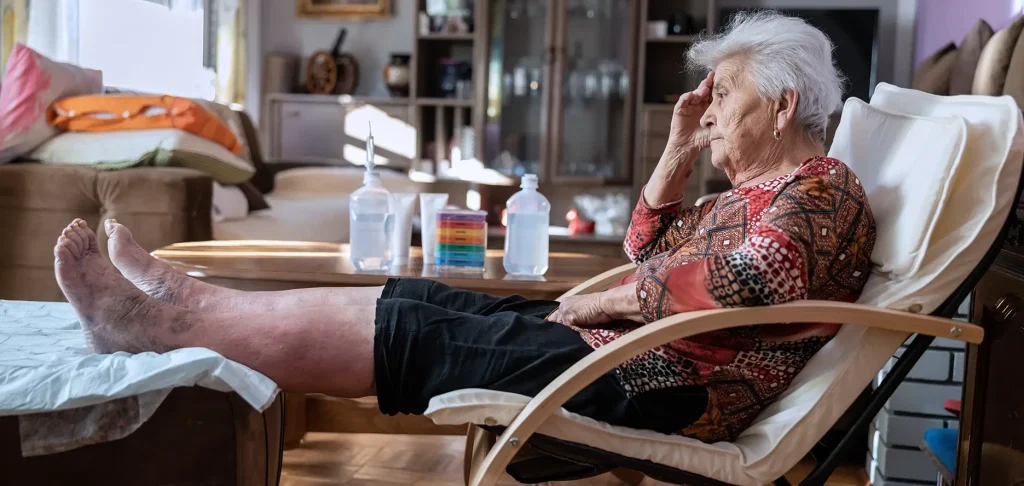
Pain is another useful distinguishing factor. Lymphedema doesn’t usually cause significant direct pain from the swelling itself, especially early on. The discomfort that does develop tends to come from joint stress or the added weight of a chronically swollen limb — not the swelling itself.
Chronic venous insufficiency is a different experience. The aching, heaviness, and throbbing tend to worsen the longer you’re on your feet. What gives it away is the relief that comes from putting your legs up — elevation helps blood drain back toward the heart, and most people with venous disease feel noticeably better within thirty minutes of lying down with their legs raised. That response alone is a meaningful clue.
4. What the Skin Looks Like
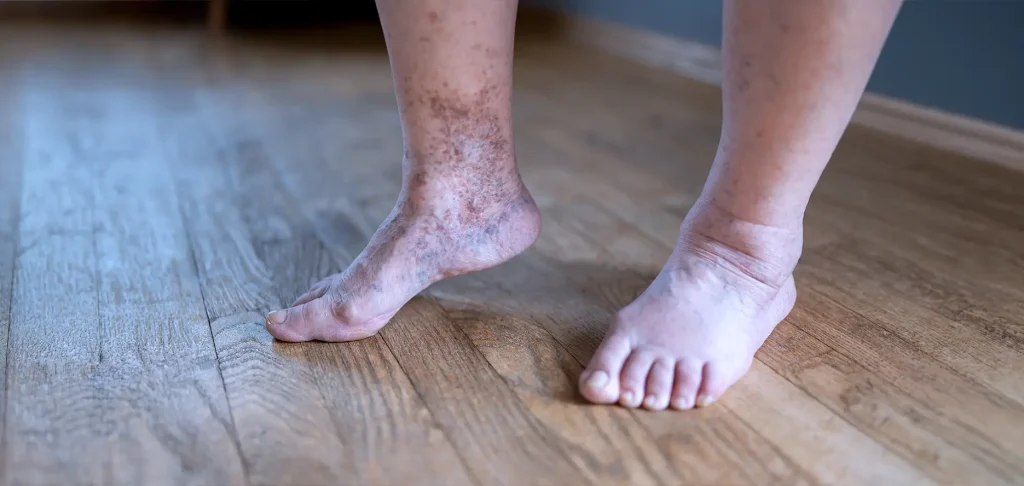
Each condition leaves its own marks on the skin, and they’re different enough to be informative. Lymphedema causes the skin to thicken and toughen gradually. It can feel drier than usual, rougher to the touch, and in more advanced cases develops a bumpy, almost cobblestone texture that’s hard to miss once you know what you’re looking for.
Chronic venous insufficiency tends to discolor the skin; reddish or brownish patches in the affected areas are common. Bulging varicose veins frequently accompany the swelling, and where circulation is most compromised, venous ulcers can develop. Skin darkening alongside prominent veins is a sign that chronic venous insufficiency treatment should be part of the conversation sooner rather than later.
5. How the Swelling Responds
Elevate your legs for twenty to thirty minutes and pay attention. Chronic venous insufficiency typically responds well — swelling goes down because gravity is now working with circulation rather than against it.
Lymphedema doesn’t behave the same way. The fluid is stuck in the tissue itself, and repositioning the limb doesn’t shift it much. If elevation does next to nothing for your swelling, that points toward a lymphatic issue rather than a venous one.
Getting the Right Care
These two conditions follow different treatment paths entirely. Lymphedema treatment centers on compression garments, specialized massage, targeted movement, and physical therapy designed to encourage lymph fluid through the body more effectively.
Chronic venous insufficiency treatment covers more ground — compression stockings and medications on the conservative end, and minimally invasive procedures like radiofrequency ablation, foam sclerotherapy, and vein closure systems for cases that need more direct intervention.
Vascular Specialists in Arizona have the diagnostic tools and hands-on experience to tell these conditions apart and put together a plan based on what’s actually driving your symptoms — not just what’s visible on the surface.
If your swelling is persistent, worsening, or simply doesn’t feel right, don’t put it off. Visit Advanced Cardiovascular Center, where specialists offer prompt evaluations — because knowing what you’re dealing with early makes treatment considerably more straightforward.