Your leg veins have a tough job: they need to push blood back up toward your heart, fighting gravity the whole way. Tiny valves inside those veins help keep blood moving in the right direction. When these valves stop working right, blood slips backward and pools up. Doctors call this “venous reflux,” and it’s what makes your legs feel heavy, achy, or swollen. You might even notice your skin changing or those bulging varicose veins showing up.
Now, not every faulty vein is a straight shot. Some are twisted, branch off in odd directions, or have already been treated before. That’s where Varithena® Foam Sclerotherapy comes in. This isn’t surgery. It’s a modern, ultrasound-guided treatment built to handle all those tricky, winding veins that traditional approaches can miss.
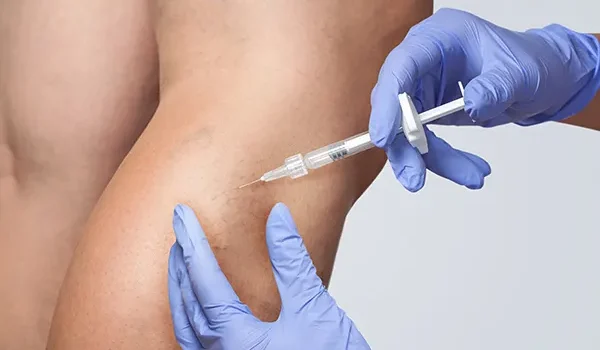
What makes Varithena® special?
For starters, it’s not just some foam a nurse whips up by hand. It is a low-nitrogen microfoam with tiny, uniform bubbles. That consistency means the treatment works the same way every time. Unlike the old liquid medicines, this foam actually pushes the blood out of the vein first, and then goes to work on the vein wall. That gives it more time to do its job, so it’s better at closing off bigger or more complex veins.
Throughout the process, your doctor uses an ultrasound to see exactly where the foam is and make sure it’s going where it needs to go.
Who is a good fit for Varithena®?
This procedure is worth considering if
- you’ve got varicose veins with reflux in your great saphenous or accessory veins
- your veins are too twisty or branchy for catheter treatments
- your varicose veins keep coming back after surgery, laser, or radiofrequency.
- you want to avoid heat or surgery.
Of course, your doctor will do a full exam and an ultrasound to make sure it’s right for you.
Here’s how the procedure works
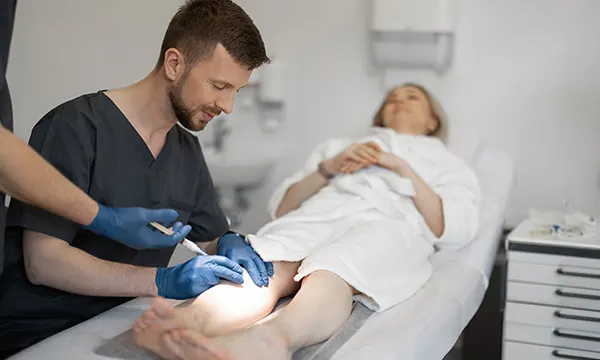
You walk in without any need for general anesthesia. The doctor maps out your veins with an ultrasound, cleans your skin, and slides a tiny needle into the target vein. Watching the screen, they inject the Varithena® foam and track how it moves. The foam irritates the vein lining just enough to make it collapse and seal shut.
Afterward, they might put a compression wrap on your leg to help everything heal. Usually, you’re done in under an hour, depending on the extent of vein disease.
What to expect after this procedure
Recovery is pretty easy. Most people get up and walk right after the treatment and head home the same day. You can do most of your usual stuff within a day, though you might want to skip standing for long stretches or hitting the gym for a bit.
Mild soreness, tightness, or bruising along the treated vein is normal and fades as your body absorbs the closed-off vein. Your doctor will probably recommend wearing compression stockings for a little while and will schedule follow-up ultrasounds to make sure everything’s healing as it should.
Benefits
Varithena® really delivers both for how your legs feel and how they look. Most people start to see veins fade away over 3-6 weeks, with bigger improvements over the next few months. Leg pain, heaviness, swelling, and fatigue all tend to go down. As those problem veins close off, healthy veins pick up the slack, so your circulation actually improves.
Safety and effectiveness
No heat, no catheters, no incisions! Varithena® is gentle, especially for veins that are tough to treat any other way. Studies back it up: about half to 80% of veins respond after just one session, and extra treatments can push that up to 80-90%.
When vascular specialists do the procedure with ultrasound, it’s very safe. Side effects like redness, swelling, itching, or tenderness are usually minor and go away on their own. Serious problems almost never happen when the right patients get the right care.
Varithena® vs. other treatments
Varithena® works alongside other vein treatments. It’s not here to replace them. Laser and radiofrequency ablation are still great choices for straight, easy-to-reach saphenous veins. But Varithena® stands out when veins have a tricky shape, earlier treatments didn’t do the job, or when patients want a non-thermal option.
Most of the time, doctors combine Varithena® with other procedures like ablation or sclerotherapy to get the best results. It’s all about creating a treatment plan that fits each patient’s needs.
Long-term results and follow-up
When doctors treat veins with Varithena®, those veins don’t come back. Still, venous disease sticks around, and it’s a chronic problem. New vein issues can crop up later, thanks to things like genetics, daily habits, or just the way the disease progresses.
Keeping up with regular checkups and paying attention to your vein health really helps you hold onto those good results. Spotting new symptoms early makes it easier to jump in with treatment before things get worse.
Cost and insurance
In Arizona, sclerotherapy for spider veins usually runs between $200 and $500 per session if you’re paying out of pocket. The exact price depends on how big an area you need treated, how many veins are involved, and the provider’s experience.
Why experience matters in foam sclerotherapy
Getting great results with Varithena® isn’t just about the medicine. You need an accurate diagnosis, careful ultrasound mapping, and a steady hand for the injections. Aftercare matters, too. That’s why it’s so important to have a clinician who’s trained in venous disease and knows how to use ultrasound for guidance.
At Advanced Cardiovascular Center, we tailor the treatment to fit each person, making sure Varithena® is used where it truly helps.
If your legs hurt, swell, feel heavy, or you see bulging veins, it’s time to get checked. A vein evaluation pinpoints what’s going on and helps you find the right treatment.